
 Italiano
 Español
 Français
 Deutsch
 Nederlands
 Polski
 Português
 Português do Brasil
 Pусский
 日本語
日本語 简体中文
简体中文 한국어
한국어 Bahasa Indonesia
This is an independent website and it'is not affiliated with or endorsed by the Vatican Museums.


Reconciliation
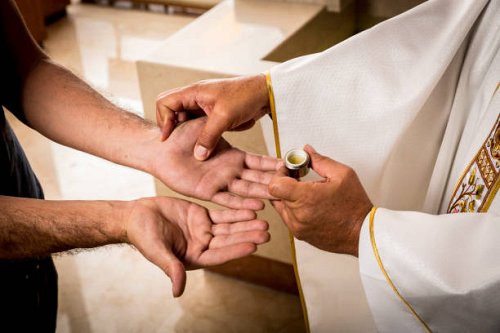
A Jubilee year is reconciliation symbolism that creates a setting for change. It asks to make our life God-centered, challenging us to bring our lives closer to God and admit His supremacy over everything. Biblical theology framed one fundamental truth for a demand for restorative social justice and honoring the earth: seeing that God is the owner of all things, everything should revolve around Him rather than a particular reality or political platform. It is He who makes the year holy by imparting on us His holiness.
During the Bull of Indiction of the Extraordinary Holy Year of 2015, however, Pope Francis pointed out that "Mercy is not opposed to justice, but is rather justice that comes from God’s way of reaching out to the sinner at the moment when the latter is to begin conversion- to look at himself and change- through which he comes to faith. […] Immediately afterwards he added: "Our understanding of God's justice can be summarized in this way: it is his mercy. The Cross of Christ reveals his judgement on all of us and on the whole world as well, yet at the same time it gives us the certainty of what?—love and new life—for ourselves and for every human being. (Misericordiae Vultus, 21).
Practical reconciliation involves participating in the Sacrament of Reconciliation. That is, take this opportunity to rediscover what confession is, and in return for confession- how God expressly sends messages of forgiveness. Some of the Jubilee churches are open round the clock. In preparation to receive the sacrament, you can follow a guide.