

 Italiano
 English
 Español
 Français
 Deutsch
 Nederlands
 Polski
 Português
 Português do Brasil
 日本語
日本語 简体中文
简体中文 한국어
한국어 Bahasa Indonesia
Это независимый веб-сайт, который не связан с Музеями Ватикана и не поддерживается ими.


Реставрация «Страшного суда» в Сикстинской капелле: сохранение шедевра Микеланджело
 «Страшный суд» в Сикстинской капелле сохранился в отличном состоянии
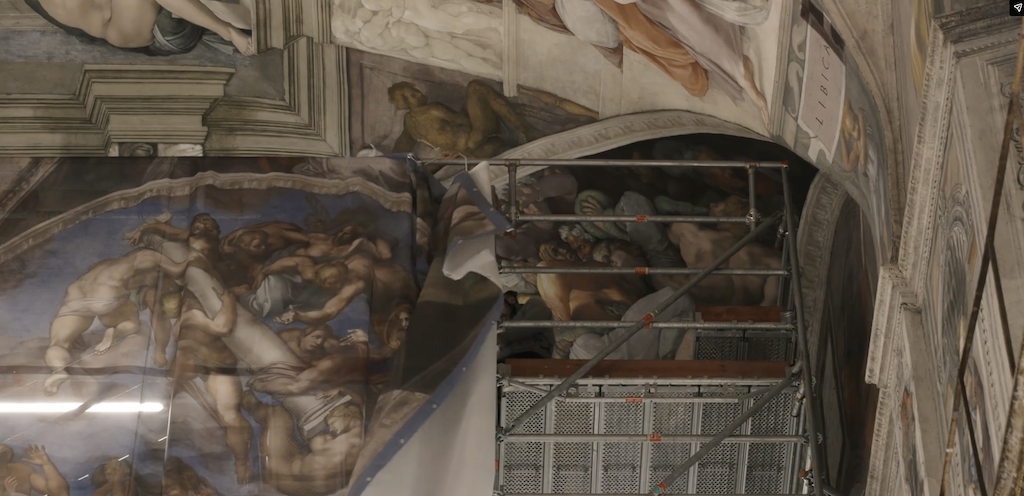
Реставрация «Страшного суда» Микеланджело началась с установки новых лесов в Сикстинской капелле 25 февраля 2026 года. Барбара Джатта (директор Ватиканских музеев и культурного наследия) заявила, что проект очистки должен быть готов до Пасхи, но Сикстинская капелла будет оставаться открытой как для религиозных, так и для нерелигиозных гостей до тех пор, пока не будут завершены все реставрационные работы. Реставраторы из Лаборатории реставрации настенных росписей и деревянных материалов Ватиканских музеев будут использовать временные леса для реставрации картины Микеланджело «Страшный суд». Картина расположена в верхней части всей стены над алтарем (Страшный суд = Giudizio Universale).
Экранная копия для посетителей на время реставрации
В рамках усилий, направленных на то, чтобы помочь людям представить себе первоначальный вид необыкновенных шедевров Микеланджело, перед лесами, которые помогают в проведении реставрационных работ, будет установлен экран с изображением «Страшного суда ». Все размещение (леса, освещение и изображение художника) было спланировано совместно Дирекцией инфраструктуры и инженерных услуг под руководством Сальваторе Фарина и Губернаторством государства Ватикан. Это станет прекрасным впечатлением для посетителей Сикстинской капеллы. Все этапы реставрации «Страшного суда», столь же сложные с точки зрения обслуживания и реставрации, будут финансироваться Флоридским отделением Меценатов искусств Ватиканских музеев. Преданные меценаты под руководством Мэри Виатор оказали финансовую помощь этому замечательному проекту, поскольку он имеет такое большое религиозное и художественно-культурное значение.
Фотодокументация и архивные записи
По словам директора музея, этот важный проект позволит нам вести фотодокументацию всех этапов реставрационных работ из фотолаборатории, расположенной в Ватиканских музеях, а также вести архивную документацию этого процесса, фотографируя каждый этап реставрационных работ. Кроме того, в ходе очистки будет создана удивительная документация, показывающая, как будет удаляться каждый слой краски (который невозможно увидеть без помощи микроскопа), что позволит увидеть оригинальные цвета Микеланджело во всей их яркости, такими, какими они были при первоначальном нанесении; прошло почти 30 лет с момента последней реставрации Сикстинской капеллы. Музеи Ватикана привлекли Карло Пьетранджели (бывшего генерального директора Музеев Ватикана) в качестве своего последнего консультанта перед открытием музейной выставки в прошлом году. Последнюю работу по реставрации этого невероятного произведения искусства выполнил Джанлуиджи Колалуччи (главный реставратор Ватиканских музеев, реставрация живописи и дерева). После завершения этой работы все люди во всем мире смогут в полной мере оценить прекрасное произведение Микеланджело и по достоинству оценить величие его видения.
Историческое значение «Страшного суда»
23 февраля 2026 года Ватиканские музеи выпустили пресс-релиз, в котором описали этот крупный и сложный проект по реставрации, а также сообщили, что различные другие люди, имеющие за плечами значительные достижения, поделились важными идеями относительно своих проектов. Фабрицио Биферали, куратор (живопись XV–XVI веков), пояснил, что «Страшный суд», написанный в 1536 году при папстве Павла III Фарнезе, был завершен в конце пятилетней работы в 1541 году. Как показано в книге «Жизнь Микеланджело Буонаротти», написанной Асканио Кондиви, в последний день мира папа Павел III Фарнезе был настолько потрясен дебютом шедевра, что упал перед ним на колени и умолял Господа простить ему все грехи его жизни на протяжении всей истории человечества.
Техника реставрации: удаление патины
По словам Паоло Виолини, главного реставратора Лаборатории по консервации картин и деревянных материалов, патина должна быть удалена с поверхности фрески, поскольку белая пленка, образованная патиной, ухудшила контрастность (т. е. значения светотени) фрески, изменив тем самым четкость цвета (т. е. хроматическое значение) фрески. Патина удаляется путем счищания деионизированной водой с помощью двухслойной японской бумаги. Использование деионизированной воды позволяет полностью удалить отложения и посторонние материалы, чтобы восстановить исходный слой краски, сохранив при этом общее состояние краски в том виде, в каком она была изначально. Перед началом этой работы были проведены обширные научные испытания, полная фотографическая документация состояния произведения и тщательная оценка его состояния, чтобы собрать доказательства, которые будут использованы для определения того, подходят ли разработанные методы для обработки произведения.
План регулярного технического обслуживания с 2010 года
С 2010 года Управление по консервации реализует план регулярного технического обслуживания Сикстинской капеллы, и в январе и феврале, когда музеи закрыты для посетителей, реставраторы картин и мрамора будут работать с коллегами, которые являются экспертами в области консервации, диагностики, логистики, а также с сотрудниками музея и Бретонским управлением инфраструктуры и услуг, чтобы обеспечить техническое обслуживание фресок и других декоративных элементов капеллы. Консервационные работы включают в себя наблюдение за фресками капеллы, удаление пыли, проверку всех систем кондиционирования и освещения, которые используются с 2014 года, и т. д. Каждая из этих работ требует тщательного наблюдения и внимания к деталям, чтобы создать стабильную среду для капеллы, обеспечить посетителям капеллы наилучшие впечатления и обеспечить наилучший уход за произведениями искусства, которые вы найдете в капелле.
Научный анализ: открытие лактата кальция
Фабио Моррезе, директор Научно-исследовательской лаборатории, считает, что необходимо принять срочные меры. «Мы уже дважды исследовали работы Микеланджело, — заявил Моррезе. — В ходе работы над этими произведениями мы постоянно контролировали слой краски как на предмет максимального накопления частиц в слое краски, так и на предмет ряда участков, где краска стала белой». Он продолжает: «В каждом случае мы смогли провести анализ каждого из белых участков, чтобы определить их соответствующий материальный состав, а также потенциальные причины образования этих белых пятен с помощью ряда научных тестов. Конечным результатом является окончательная идентификация молекулярных структур, содержащихся в этих материалах, как лактат кальция». Лактат кальция — это соль, которая образуется на верхнем слое краски и имеет относительно высокую степень растворимости в воде. Растворимость в воде — это химико-физическое свойство, которое позволяет легко удалить соль с поверхности краски с помощью воды, не повреждая пигмент под ней.
Сохранение шедевра для будущих поколений
«Страшный суд» Микеланджело — самое значительное произведение искусства, когда-либо созданное, и оно будет оставаться первым ориентиром для любой будущей археологической и архивной работы. На основании моих исследований и анализа я могу окончательно доказать, что, построив новый тип лесов, специально спроектированных таким образом, чтобы мы могли получить доступ к окрашенной поверхности «Страшного суда» с соседней стены, реставраторы смогут безопасно завершить реставрацию каждой части окрашенной поверхности, не закрывая Сикстинскую капеллу для широкой публики; таким образом, сохранив одно из важнейших художественных достижений прошлого для будущих поколений. Монсеньор Теренс Хоган, координатор Управления по связям с меценатами искусства, Музеи Ватикана.