

 Italiano
 English
 Español
 Français
 Deutsch
 Nederlands
 Polski
 Português
 Pусский
 日本語
日本語 简体中文
简体中文 한국어
한국어 Bahasa Indonesia
Este é um site independente e não é afiliado nem endossado pelos Museus do Vaticano.


O presépio da Igreja de São Pellegrino, no Vaticano
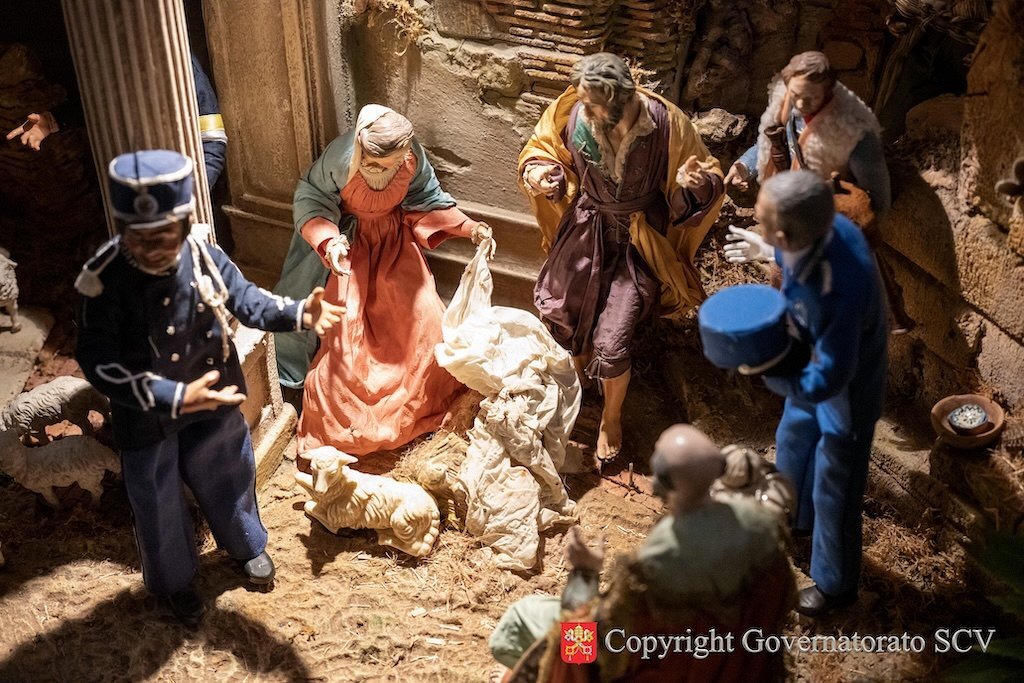 O presépio na Basílica de São Pellegrino, no Vaticano
Ela acolhe todos os que se aproximam com um convite para refletir sobre o mistério do nascimento de Cristo. Nela, um membro da Banda do Corpo de Gendarmerie, de pé e voltado para o presépio, é visto juntando-se ao coro dos Anjos para entoar o canto Venite Adoremus. Com sua música, ele rompe o silêncio da noite, anunciando a maravilhosa notícia de que o Senhor nasceu em Belém, da Virgem Maria.
Uma importante representação dele é encontrada em um presépio bastante incomum na Igreja de San Pellegrino, no Vaticano, composto por todos os elementos pertencentes à Diretoria de Serviços de Segurança e Proteção Civil— gendarmes, bombeiros vestidos com seus uniformes de trabalho, bem como muitos militares. Todas essas figuras se voltam para o presépio, mantendo assim uma vigilância coletiva com fé e serviço.
A arte do maestro Domenico Bonifacio
A obra, conhecida pelo Maestro Domenico Bonifacio— um artista famoso pelo presépio na Sala Clementina do Palácio Apostólico e muitas outras obras — é mais do que apenas uma narração figurativa. Em material bem feito, podem-se notar sinais do Monte La Verna— o lugar onde São Francisco recebeu os estigmas.
As figuras simbólicas dos gendarmes
No centro da composição está uma representação simbólica personificada por duas figuras uniformizadas, que servem como eixos narrativos essenciais de toda a cena. O gendarme de plantão: situado de um lado, vigilante e inabalável, simboliza a obrigação histórica de salvaguardar a Sé de Pedro. Nele, o dever se manifesta como uma presença silenciosa e duradoura, funcionando como um baluarte discreto, mas vital.
O gendarme ajoelhado mostra o coração do Corpo. Ele é alguém que, tendo deixado de lado os fardos de seu papel, se vê como um buscador diante do Mistério. No lado esquerdo da Natividade, três gendarmes uniformizados — um da antiga Gendarmerie Pontifícia e dois do atual Corpo do Vaticano— conversam entre si. Eles formam um elo ideal que atravessa o tempo. Em sua troca, vive-se uma linha constante de fidelidade e serviço à Igreja; uma promessa sempre cumprida.
O cenário entre ruínas antigas
O presépio está situado entre as ruínas de um edifício pagão, colocado ali propositadamente como um sinal da vitória do cristianismo. Neste local, também se pode ver um pequeno santuário construído para São Miguel Arcanjo, conhecido como o protetor celestial do Corpo.
Uma cena da vida cotidiana se desenrola à direita, em uma área que lembra a região de Campo de' Fiori, em Roma. Um pastor conduz suas ovelhas em direção ao presépio. Ele carrega uma cesta com frutos da terra para oferecer ao Salvador.
A Fontana delle Api: história e tradição
A Fontana delle Api está no centro do Presepe, projetada com considerável precisão e cuidado. Ela funciona não apenas como um componente arquitetônico, mas também como um local repleto de memórias: por muitos anos, a fonte ofereceu conforto aos guardas que realizavam tarefas de fronteira perto do portão de Sant'Anna. Nesta cena do Presépio, história, tradição e fé se unem para homenagear todos aqueles que trabalham diariamente para o Sucessor de Pedro e o Estado da Cidade do Vaticano.