
 Italiano
 English
 Español
 Français
 Deutsch
 Nederlands
 Polski
 Português
 Pусский
 日本語
日本語 简体中文
简体中文 한국어
한국어 Bahasa Indonesia
Este é um site independente e não é afiliado nem endossado pelos Museus do Vaticano.


Aniversário de 2025: Um ano do Papa Francisco ao Papa Leão XIV
O ano de 2025 será lembrado como significativo, caracterizado pelo falecimento do Papa Francisco e pela subsequente eleição do Papa Leão XIV durante o Jubileu. Este Ano Santo, dedicado à esperança, começou sob um Papa e está programado para terminar em 6 de janeiro com outro — um acontecimento verdadeiramente excepcional. Por outro lado, o ano também testemunhou uma escalada das tensões geopolíticas internacionais e um aumento dos “fragmentos” que os dois papas anteriores referiram como constituindo a “Terceira Guerra Mundial”.
O mundo inteiro converge para Roma
Durante o Ano Santo, mais de 30 milhões de peregrinos de todo o mundo visitaram Roma para participar das celebrações diárias, além de mais de 30 eventos especiais voltados para vários setores da Igreja e da sociedade.
Em meio à celebração e ao otimismo do Jubileu, o mundo também observou a hospitalização do Papa Francisco na Policlínica Gemelli em 14 de fevereiro, seguida por seu falecimento em 21 de abril e o funeral realizado cinco dias depois. A cerimônia fúnebre do papa argentino atraiu mais de 250.000 pessoas, enquanto quase o dobro desse número veio prestar suas homenagens enquanto ele estava em câmara ardente na Basílica de São Pedro. Enquanto ele estava hospitalizado, muitas pessoas se reuniram para recitar o rosário da noite pelo bem-estar do papa na Praça de São Pedro, enquanto outras mantiveram uma vigília de oração no pátio do hospital.
A hospitalização do Papa Francisco
No início de 2025, o Papa Francisco começou o novo ano fazendo um apelo no Angelus denunciando a guerra “desumana” e transmitindo suas condolências às mães que sofreram a perda de seus filhos devido à violência. Posteriormente, em meados de fevereiro, o Papa argentino foi internado no hospital pelo que inicialmente se pensava ser um caso rotineiro de bronquite; no entanto, mais tarde foi determinado que se tratava de uma infecção polimicrobiana caracterizada por múltiplas crises e melhoras graduais.
No entanto, apesar de sua saúde delicada, o Papa persistiu em seus compromissos nas semanas seguintes, que incluíram audiências gerais e jubilares, reuniões realizadas pela manhã e à tarde, bem como conversas telefônicas noturnas com a única paróquia católica localizada em Gaza.
Ele anunciou ainda duas nomeações notáveis: a irmã Simona Brambilla como Prefeita do Dicastério para os Institutos de Vida Consagrada e as Sociedades de Vida Apostólica, em 6 de janeiro, e a irmã Raffaella Petrini como Presidente do Governadorado do Estado da Cidade do Vaticano, em 15 de fevereiro. Essas nomeações marcam um momento histórico, pois duas mulheres, ambas religiosas, agora lideram instituições eclesiásticas importantes pela primeira vez.
Ao longo do período de hospitalização, dois momentos específicos se destacaram como especialmente significativos: a comovente mensagem em áudio do Papa Francisco, transmitida em espanhol com voz suave, expressando gratidão aos fiéis por suas orações; e a única fotografia capturada durante esse período, retratando o Papa em uma bata de hospital e estola roxa dentro da pequena capela no décimo andar.
Uma despedida conclusiva
Em 22 de março, os médicos anunciaram a alta do Papa Francisco do hospital. No dia seguinte, ele apareceu publicamente pela primeira vez em uma varanda do Gemelli. Em seguida, iniciou sua viagem de volta ao Vaticano, que incluiu uma breve visita à Basílica de Santa Maria Maior para prestar homenagem à imagem de Salus Populi Romani.
Naquele momento, era inconcebível para qualquer pessoa que o túmulo dentro da Basílica levasse o nome de Francisco, especialmente depois que o Papa fez três aparições públicas: primeiro na Praça de São Pedro durante o Jubileu dos Doentes; depois, durante uma visita ao túmulo de São Pio X e à estátua do Papa Bento XV; e, finalmente, sua última aparição para o Urbi et Orbi da Páscoa— esta sendo tanto a primeira após a hospitalização quanto a última de sua vida.
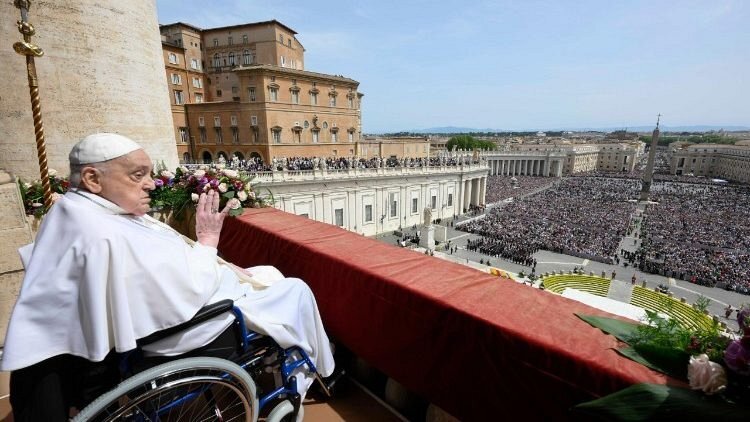 O Papa Francisco saúda a multidão pela última vez durante a bênção Urbi et Orbi da Páscoa (VATICAN MEDIA Divisione Foto)
Suas palavras ficaram gravadas de forma indelével na memória coletiva de todos: “Obrigado por me trazerem de volta à Praça”.
O Papa voltou para a Casa do Pai
Na segunda-feira de Páscoa, às 9h50, o anúncio feito pelo cardeal Camerlengo Kevin Joseph Farrell ecoou em todo o mundo: “Esta manhã, 21 de abril de 2025, o Papa Francisco voltou para a casa do Pai.” A causa de sua morte foi identificada como um derrame cerebral, seguido por colapso cardiovascular.
Assim começou uma nova era para a Igreja. Após o falecimento do Papa, uma sequência de tradições de longa data foi iniciada: as homenagens sinceras prestadas ao Papa na Casa Santa Marta e, posteriormente, na Basílica de São Pedro, após o corpo ter sido transferido para lá; o fechamento do apartamento dentro do Palácio Apostólico; o ritual de fechar o caixão; o funeral digno; a procissão pelas ruas de Roma; e o enterro sob um monumento de mármore branco na Basílica de Santa Maria Maior.
Mesmo agora, o túmulo do Papa Francisco continua a atrair um fluxo constante de peregrinos e visitantes.
O Conclave e a Eleição de um Novo Pontífice
Em 27 de abril, a primeira missa dos novemdiales foi celebrada pelo cardeal secretário de Estado Pietro Parolin. No dia seguinte, aproximadamente 180 cardeais se reuniram para a Congregação Geral inicial em preparação para o Conclave, incluindo aqueles das dioceses mais distantes globalmente e aqueles com mais de oitenta anos que não possuem direito a voto.
O dia7 de maio marcou o início desta tradição secular de eleição do sucessor. Ele ficará registrado na história como um dos conclaves mais rápidos, culminando na eleição do cardeal Robert Francis Prevost como o 267º sucessor de São Pedro, em 8 de maio, durante a quarta votação.
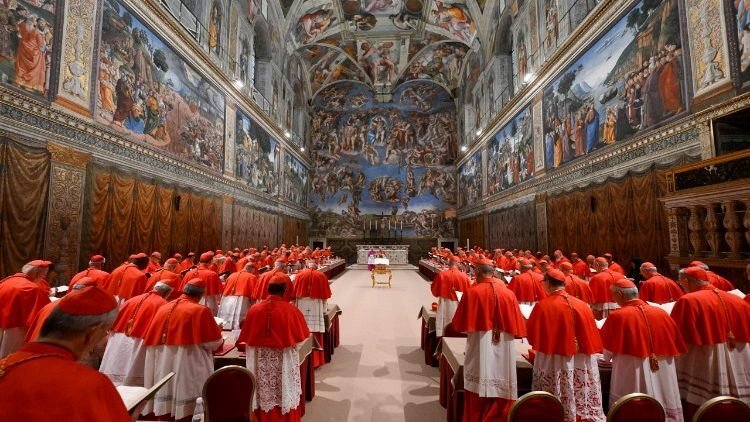 Dentro da Capela Sistina durante o Conclave que elegeu o Papa Leão XIV (@Vatican Media)
O primeiro papa proveniente dos Estados Unidos nasceu em Chicago 69 anos antes. Ele passou mais de duas décadas trabalhando em um país latino-americano como missionário, pároco, catequista e bispo, por isso certamente traz consigo “uma alma peruana”.
Prevost é um padre da Ordem de Santo Agostinho. Ele serviu dois mandatos como Prior Geral da Ordem. É formado em Matemática e Direito Canônico pela Universidade de Minnesota, além de ter uma vasta experiência na Cúria Romana, tendo servido como Prefeito do Dicastério para os Bispos.
Começa um novo papado
O papa recém-eleito adotou o nome Leão XIV em homenagem ao papa Leão XIII, autor da Rerum Novarum, que marcou o início da Doutrina Social da Igreja.
O Papa Leão começou seu primeiro discurso com uma única palavra: “Paz”. Ele continua a usar essa palavra 10 vezes ao longo de todos os discursos. Ele também usará a frase “pacífico, desarmado e desarmado” para promover seu papado.
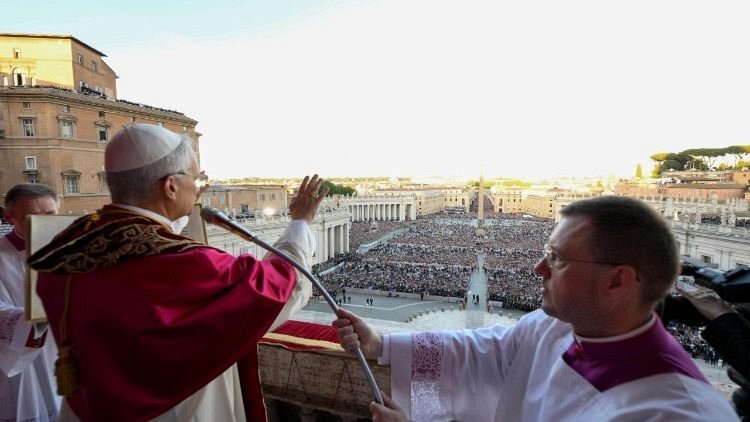 O recém-eleito Papa Leão cumprimenta a multidão da varanda central da Basílica de São Pedro (@Vatican Media)
Na Capela Sistina, no dia seguinte à sua eleição, o Papa expressou ao Colégio Cardinalício outra parte de sua visão: “Estejam dispostos a não existir e deixem Cristo existir”.
Em busca da paz
O papado do primeiro papa dos Estados Unidos começou em 18 de maio, na missa celebrada na Praça de São Pedro. Muitos peregrinos e dignitários de todo o mundo estiveram presentes na inauguração do pontificado do novo papa.
O Papa Leão tem sido um defensor da paz desde que se tornou papa e tem pedido consistentemente aos “grandes” da Terra que “nunca mais façam guerra”. Em 11 de maio, na Loggia das Bênçãos, durante seu primeiro Regina Caeli, ele repetiu essa mensagem.
O Papa Francisco manteve conversações com os presidentes da Rússia (Vladimir Putin) e da Ucrânia (Volodymyr Zelensky), tendo-se encontrado com Volodymyr Zelensky em três ocasiões específicas, incluindo o seu segundo encontro em Castel Gandolfo, Itália, onde o papa restabeleceu uma residência de verão após 12 anos; Ele fez três visitas ao Castel Gandolfo, duas na Villa Barberini e uma no museu recém-inaugurado no Palácio Apostólico.
Além disso, o Papa Leão XIV sugeriu que o Vaticano poderia ser usado como um local de mediação e negociação para ajudar a acabar com a violência na Ucrânia e apoiar os esforços diplomáticos (muitas vezes feitos “nos bastidores”) em todas as áreas de conflito.
Os jovens como figuras centrais do ano de 2025
Em 7 de setembro, o Papa Leão honrou a memória de seus antepassados canonizando dois jovens santos, Carlo Acutis e Pier Giorgio Frassati. Ambas as cerimônias de canonização foram originalmente planejadas para coincidir com o Jubileu da Juventude e o Jubileu da Adolescência; no entanto, ambas foram adiadas na época da morte do Papa Francisco.
O principal evento que ocorreu durante os primeiros oito meses do papado do Papa Leão foi um Jubileu da Juventude, que aconteceu de 28 de julho a 3 de agosto. Este evento reuniu mais de 1.000.000 de jovens de todo o mundo para participar da vigília e da missa celebrada pelo Papa em Tor Vergata.
A República da Turquia e a República Libanesa
Em sua primeira viagem apostólica mundial, o Papa Leão visitou a Turquia e o Líbano entre 27 de novembro e 2 de dezembro. O objetivo dessa viagem à Turquia foi celebrar o 1700º aniversário do Concílio de Nicéia. Enquanto estava lá, o Papa visitou Ancara antes de ir para Istambul para se encontrar com Bartolomeu I, o Patriarca de Constantinopla. Em seguida, ele viajou para Iznik, onde celebrou uma missa memorial à beira do lago pelas ruínas da Basílica de São Neófito, que foi o local do concílio ecumênico.
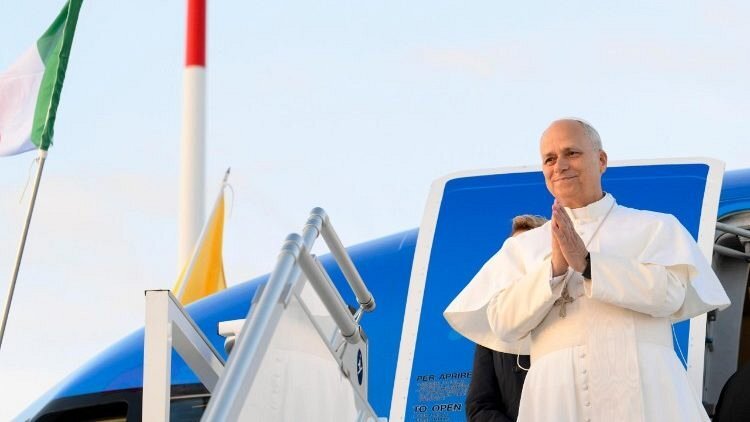 O Papa faz sua primeira viagem apostólica internacional (@VATICAN MEDIA)
O Papa visitou o local da explosão do Porto de Beirute em 2020, onde se encontrou e abraçou tanto os sobreviventes da explosão como as famílias das vítimas mortais do ataque. Também organizou uma “mini Jornada Mundial da Juventude” em Bkerké, que contou com a participação de aproximadamente 15 000 jovens do Líbano e arredores. Encontrou-se com os líderes das Igrejas cristãs e representantes de outras minorias e rezou com eles pela paz. O Papa exortou os líderes mundiais a pararem de lutar entre si e a deporem as armas.
Antecipando o ano de 2026
Em 6 de janeiro de 2024, o Ano Santo chegará ao fim com o fechamento da Porta Santa da Basílica de São Pedro, após um ano de celebrações e eventos especiais do jubileu, bem como das Portas Santas das outras três basílicas papais que já foram fechadas: Santa Maria Maggiore (25 de dezembro), São João de Latrão (27 de dezembro) e São Paulo Fora dos Muros (28 de dezembro).
Um consistório extraordinário será realizado nos dias 7 e 8 de janeiro de 2026 (Roma). Os cardeais que chegarem de várias partes do mundo passarão dois dias refletindo e rezando. Eles darão ao Papa (Leão) apoio e conselhos sobre como governar toda a Igreja (Igreja universal), bem como promover a escuta, a sinodalidade e a unidade e trabalhar para eliminar/vencer todas as formas de polarização.