
 Italiano
 Español
 Français
 Deutsch
 Nederlands
 Polski
 Português
 Português do Brasil
 Pусский
 日本語
日本語 简体中文
简体中文 한국어
한국어 Bahasa Indonesia
This is an independent website and it'is not affiliated with or endorsed by the Vatican Museums.


The Next Jubilee Is 2033: Why the Holy Doors Open Again in Seven Years
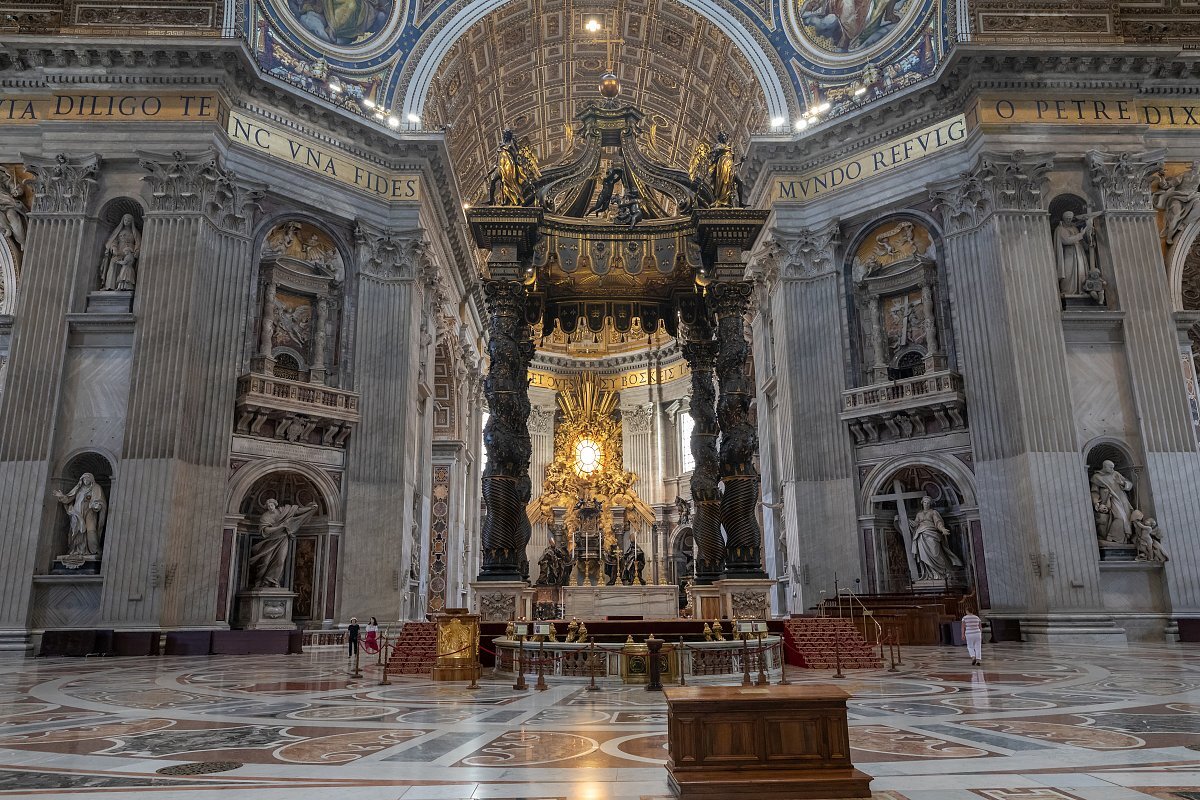 Holy Doors Open Again in Seven Years at Vaticans
The Catholic calendar measures things in chunks of 25 years. Ordinary Jubilees fall on multiples of 25: 2000, 2025, 2050, and so on. The Holy Doors of Rome's four major basilicas open then, and only then. So when Pope Leo XIV announced in Istanbul in November 2025 that the next Jubilee would be in 2033, he was breaking a pattern. And he was doing it for a specific reason.
2033 is the conventional 2,000th anniversary of the death and resurrection of Christ, traditionally dated to AD 33. The Catholic Church will mark it with an Extraordinary Jubilee: the Holy Year of Redemption. The Holy Doors that were just sealed in January 2026 will open again seven years from now, not twenty-four.
What Pope Leo XIV actually announced
The announcement came in two stages. The first was on November 29, 2025, when Pope Leo XIV was in Istanbul for the 1,700th anniversary of the Council of Nicaea. Speaking at an ecumenical encounter with other Christian leaders, he invited "the faithful to travel together on the spiritual journey that leads to the Jubilee of Redemption in 2033, with the prospect of a return to Jerusalem." The Holy See Press Office confirmed the framing immediately afterward.
The second was on January 6, 2026, the Feast of the Epiphany, the same day the last of the Holy Doors was sealed at the close of the 2025 Jubilee. Catholic outlets reported the reaffirmation; planning bodies and dioceses began moving into preparation mode. The Archdiocese of Denver, among others, launched a nine-year novena specifically directed toward the 2033 Holy Year. The Italian platform giubileo-2033.com was registered and went active. An international organization called Global 2033 was already operating during the 2025 Jubilee, gathering Catholic leaders to prepare.
The point is that this is not speculation. The 2033 Jubilee is officially planned, confirmed at the highest level, and being prepared for now, seven years in advance.
The 2033 logic: 2,000 years after AD 33
Christian tradition places the death and resurrection of Jesus in the year AD 33. The dating is not certain — scholarship favors a range between AD 30 and AD 33, with AD 33 being one of the more commonly cited options because it aligns with a Passover full-moon calendar reconstruction. The Catholic Church has historically marked the millennial-scale anniversaries of this event with major celebrations: the Holy Year of 1933 was an Extraordinary Jubilee called by Pius XI specifically to mark the 1,900th anniversary of the Redemption.
So 2033 is the 100-year anniversary of the 1933 Extraordinary Jubilee, and the 2,000th anniversary of the original event itself. The framing is deeply historical: the Church positions this as the largest single anniversary of the Christian story available within the lifetimes of most people alive today. Pope Leo XIV's description of it as the "Jubilee of Redemption" makes the theological program clear.
Ordinary versus extraordinary jubilees
Two kinds of Jubilees exist in modern Catholic practice. Ordinary Jubilees follow the 25-year cycle established by Boniface VIII in 1300. The most recent was the 2025 Jubilee of Hope, which closed in January. The next ordinary Jubilee remains scheduled for 2050.
Extraordinary Jubilees can be called by the pope outside the cycle to mark specific events or anniversaries. They are less rare than people often think: the 20th and 21st centuries saw multiple extraordinary Jubilees, including 1933 (1,900th anniversary of the Redemption), 1983-1984 (1,950th anniversary), and the Jubilee of Mercy in 2015-2016 (called by Pope Francis on March 13, 2015). The 2033 Jubilee will be the latest in this lineage.
There is also an extraordinary Jubilee currently running: the Jubilee of St. Francis, which began on January 10, 2026 and runs until January 10, 2027, marking the 800th anniversary of the saint's death. This one is focused on Assisi rather than Rome, but it overlaps the Roman Jubilee aftermath in the calendar.
Jerusalem, not just Rome
The unusual feature of the 2033 Jubilee is its geographic emphasis. Pope Leo XIV has explicitly framed it as a pilgrimage to Jerusalem and the Holy Land, with particular focus on the Cenacle — the site traditionally identified as the Upper Room where the Last Supper occurred and where Pentecost is said to have taken place. This is different from the standard Roman pilgrimage model.
The pope has also emphasized the ecumenical dimension. He has met with Patriarch Bartholomew of Constantinople to discuss a common celebration, and his motto In Illo uno unum ("In the One, we are one") has been invoked in connection with the 2033 plans. The intent appears to be a Jubilee that includes Christians beyond the Catholic Church, anchored at sites significant to all Christian traditions.
What this means in practice is still developing. Holy Land pilgrimages will likely be a large component of the 2033 experience, with Rome remaining important but not exclusive. Pilgrims will need to think about travel to Jerusalem in a way that the 2025 Jubilee did not require.
Will the Holy Doors in Rome open again?
The shorter answer is yes. While the strict 25-year rule would mean the Roman basilica doors stay shut until 2050, extraordinary Jubilees have historically involved opening Holy Doors as well. The Jubilee of Mercy in 2015-2016 opened the Holy Door at St. Peter's on December 8, 2015. The same pattern is expected for 2033, though the formal arrangements have not been published in detail this far ahead.
So the realistic baseline is: yes, the Roman Holy Doors will reopen in late 2032 or early 2033 for the start of the Jubilee of Redemption. If you missed walking through them in 2025, you will likely have another chance in seven years. For context on the doors themselves and what they symbolize, our guide to Rome's four Holy Doors covers the relevant background.
Planning ahead for 2033
Seven years is enough time to think carefully about how to do this. A few practical considerations:
The Holy Land component will be a major piece. Pope Leo XIV's framing places Jerusalem alongside Rome as a central destination. Tour operators and dioceses are already structuring multi-destination itineraries. If you plan to participate, factor in regional travel — Tel Aviv flights, Jerusalem accommodation, and the geopolitical considerations that come with Holy Land travel — in addition to Rome bookings.
Rome will fill up earlier than 2025. The 2025 Jubilee saw bookings spike about 12 months out for accommodation in central Rome. A 2,000th-anniversary Jubilee with both Roman and Jerusalem dimensions will likely see longer-tail booking pressure. Visiting Rome in 2031 or 2032, ahead of the official Jubilee opening, may be the strategic move for travelers who want to see the city without the crowds.
The current post-Jubilee window matters. The window between now and 2033 is the most relaxed time to visit Rome and the Vatican that most people will see in their lifetimes. Crowds are down, infrastructure is freshly refurbished, the Sistine Chapel was just cleaned, and tour operators are not at capacity. If you have flexibility, the years 2026-2031 are genuinely better for a Rome trip than either 2025 or 2033 will be. Our Vatican Museums 2026 visitor guide covers what is currently easier than it has been in years.
One observation worth keeping in mind
The announcement of a 2033 Jubilee changes the framing of the post-2025 period. What looked like a long quiet stretch (24 years until the next ordinary Jubilee) is actually a seven-year run-up to the next major event. The Roman tourism calendar, the Catholic publishing calendar, the diocesan retreat calendar — all of them are now shaped by 2033. The doors are sealed but the clock is moving differently than it would have without the announcement.
For background on what just ended, our post-Jubilee overview covers what the 2025 Holy Year actually was and what's worth knowing about the immediate aftermath.