
 Italiano
 Español
 Français
 Deutsch
 Nederlands
 Polski
 Português
 Português do Brasil
 Pусский
 日本語
日本語 简体中文
简体中文 한국어
한국어 Bahasa Indonesia
This is an independent website and it'is not affiliated with or endorsed by the Vatican Museums.


Vatican Museums in 2026: A Post-Jubilee Visitor Guide
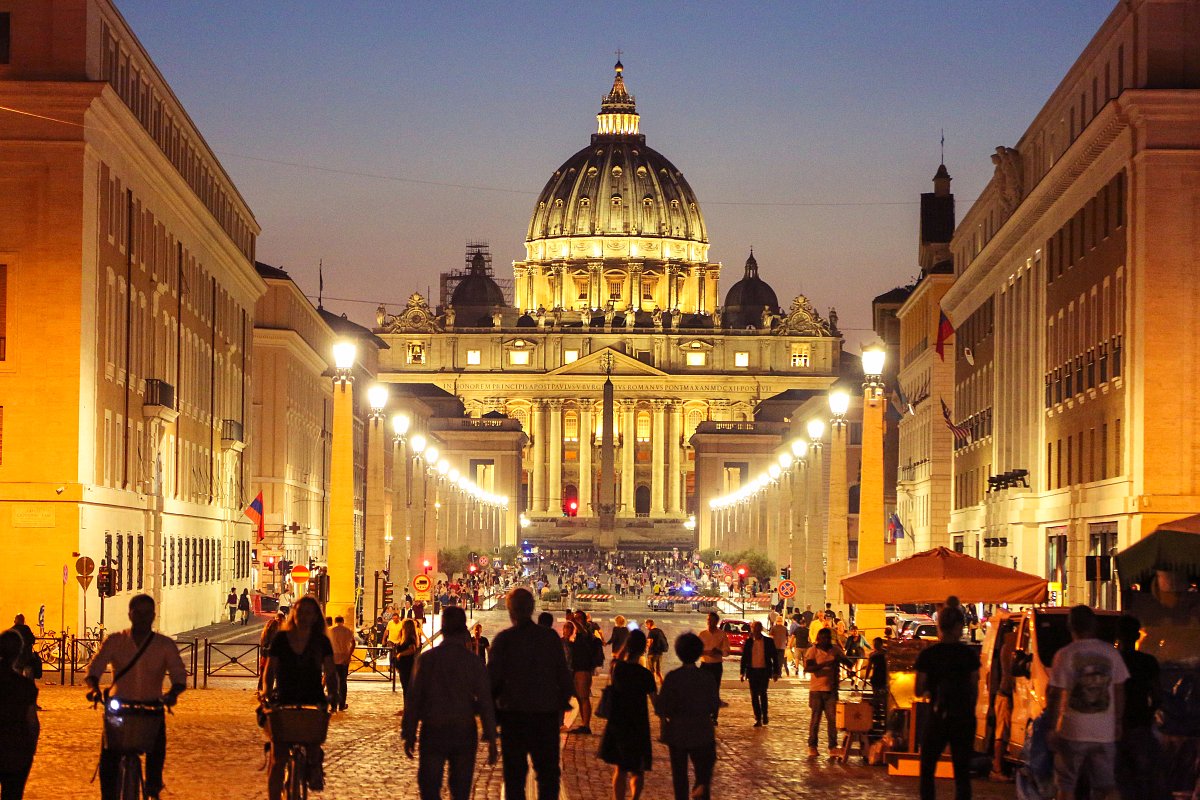 Vatican Museums by Night
Booking a Vatican Museums slot is easier in 2026 than it has been in three years. The standalone queues are shorter than they were last spring. Hotel rates near the Vatican are back to pre-Jubilee levels. None of this means visiting is suddenly trivial, but if you're planning your first trip post-2025, the timing has worked in your favor.
What follows is what's specifically different about a 2026 visit compared to a 2024 or 2025 one, and how to plan accordingly.
The crowd situation in 2026
The Vatican Museums see roughly 7 million visitors a year in a normal year. 2025 added several million more on top of that, concentrated heavily in May, August (Jubilee of Youth), and November. The basic effect was multi-hour standalone queues even off-peak, hotel rates that jumped 30-50% in the immediate Vatican area, and dinner reservations near St. Peter's that needed to be made a week ahead.
That has unwound. Early reports from operators in the first months of 2026 point to substantially shorter standalone queues, particularly in January-February (always slower months) but visibly so even through March and April. Hotel rates in Borgo and Prati are back to roughly 2023 levels. Restaurant booking has loosened across the board.
This is not permanent. By 2028 the post-Jubilee dropoff will have evened out and visitor numbers should be back to typical. The window of measurably-easier visits is real and time-limited.
What is actually new since 2024
Three things meaningfully changed about the Vatican Museums experience in the last eighteen months. They are worth knowing about before you plan.
The Sistine Chapel's Last Judgment was cleaned in February-March 2026. The restoration removed a whitish patina that had built up since the 1994 Colalucci intervention, caused by lactic acid from visitor sweat reacting with calcium carbonate in the wall surface. The colors are noticeably more vibrant than they were last year. The intense blue background that Michelangelo formulated to make the figures pop is visible again. If you saw the Sistine Chapel before March 2026, what you'll see now is genuinely different.
The Hall of Constantine reopened in mid-2025 after its own multi-year restoration. The Giulio Romano frescoes are closer to their original color palette than at any point in living memory. The room is still in the standard Vatican Museums itinerary, but most tour groups race through it on the way to the Sistine. It rewards slowing down.
The Ottaviano Metro station, the closest to the Vatican Museums entrance, was renovated as part of the broader Metro Line A program. The platforms are cleaner, the signage is new, the entrance flow has been redesigned. The walk from the metro to the museum entrance takes meaningfully less time than it did in 2023.
Booking strategy for 2026
The basic rule has not changed: book ahead, get the earliest slot you can. The specifics for 2026:
Shoulder season (March-April, October-November): book about two weeks out. You'll get the slot you want. Mid-morning entries (around 10 AM) are the most pleasant — early enough that the heaviest tour-group surge hasn't started, late enough that the very-first-entry crowd has dispersed.
Peak season (June-August): book a month out, minimum. The first-entry slots (typically 8:00 or 8:30 AM) sell out fastest because they offer the rare experience of a near-empty Sistine Chapel. If you can get one, take it.
Low season (January, February, second half of November, first week of December): you can sometimes book the day before. The galleries are quieter. The trade-off is that some special exhibitions and restoration scaffolding may still be in place.
For all seasons, the practical answer is the same: book a skip-the-line tour rather than standalone tickets. The marginal cost is small, the standalone line is still meaningful even post-Jubilee, and the booking flexibility is better.
Month by month: what to expect
March. The best month, in many years and especially in 2026. Cool weather, low crowds, manageable rain, full operating hours. The Sistine Chapel restoration completed in late March 2026, so anyone visiting from April onward will see the cleaned fresco.
April-May. Holy Week falls in early April 2026; expect a small surge around Easter Sunday but nothing approaching Jubilee-year scale. May is busier than March but still manageable.
June-July. The heat starts. Vatican Museums interiors are climate-controlled but the walk from the entrance to the Sistine Chapel is long and the press of bodies amplifies the heat. The first-entry slot becomes valuable as an alternative.
August. Many Romans leave the city. International tourism remains heavy. The basilica and museums stay open but the surrounding neighborhood feels emptier than at other times of year. Restaurant options thin out.
September-October. The second shoulder. Warm enough for café terraces, cool enough for sustained walking. Visitor numbers fall off after the first week of October. Late October is among the most underrated weeks for visiting Rome.
November-December. Cold sets in but is not severe. Christmas-period visits have their own quality; St. Peter's hosts elaborate Nativity displays. The Vatican Museums close on certain feast days, so check the calendar.
Mistakes to avoid in 2026 specifically
Three things that catch first-time visitors out:
Skipping skip-the-line because you assume crowds are down. The Jubilee dropoff is real but the Vatican Museums standalone line is structural; it can run an hour even when the city overall is quiet. The skip-the-line option is worth the marginal cost.
Going on the free-admission Sunday (last Sunday of every month). It is brutal. The queue forms before dawn, the galleries are uncomfortably full, and the Sistine Chapel becomes essentially un-experienceable. Free admission saves you the entry fee but costs you the visit. Pay the fee.
Underbudgeting the time. The museums are immense. The standard "highlights" route takes 2.5-3 hours minimum if you don't rush. Allow 4 hours if you want to actually look at the Pinacoteca, the Egyptian collection, and the Raphael Rooms (including the just-restored Hall of Constantine). Schedule lunch after, not during.
Pairing the Vatican Museums with other Rome sites in 2026
The Vatican Museums fit naturally with two other 2026-specific itineraries.
The first is the walk from Castel Sant'Angelo to St. Peter's via the newly pedestrianized Piazza Pia. The square was inaugurated in December 2024 and is now the largest pedestrian zone in Rome. A morning at the Vatican Museums, lunch in Borgo, the walk back across Piazza Pia at golden hour: that's a complete day for first-time visitors. Our walking guide to refurbished Rome covers the route.
The second is the visit to St. Mary Major, where Pope Francis was buried in April 2025. The basilica is free to enter and reachable by Metro Line A from the Vatican (Ottaviano → Termini → short walk). This pairing is the natural choice for visitors interested in the post-Jubilee Catholic story; the tomb of the pope who opened the 2025 Jubilee but didn't see it closed is in many ways the most distinctive piece of contemporary Catholic Rome.
The math on cost versus time
Vatican Museums entry costs €17 standard, with skip-the-line bumping it up to €30-50 depending on operator and additional services. The standard queue at peak times can run 90 minutes or more. The implied hourly rate at which paying extra makes sense is around €15-20 per hour saved. If your time in Rome is worth more than that to you, the math is straightforward.
For more context on the post-Jubilee period, our overview of visiting Rome after the Jubilee covers the broader picture, and our Holy Doors guide covers the four sealed basilica doors.