
 Italiano
 Español
 Français
 Deutsch
 Nederlands
 Polski
 Português
 Português do Brasil
 Pусский
 日本語
日本語 简体中文
简体中文 한국어
한국어 Bahasa Indonesia
This is an independent website and it'is not affiliated with or endorsed by the Vatican Museums.


After the Pilgrims: Walking the Refurbished Rome
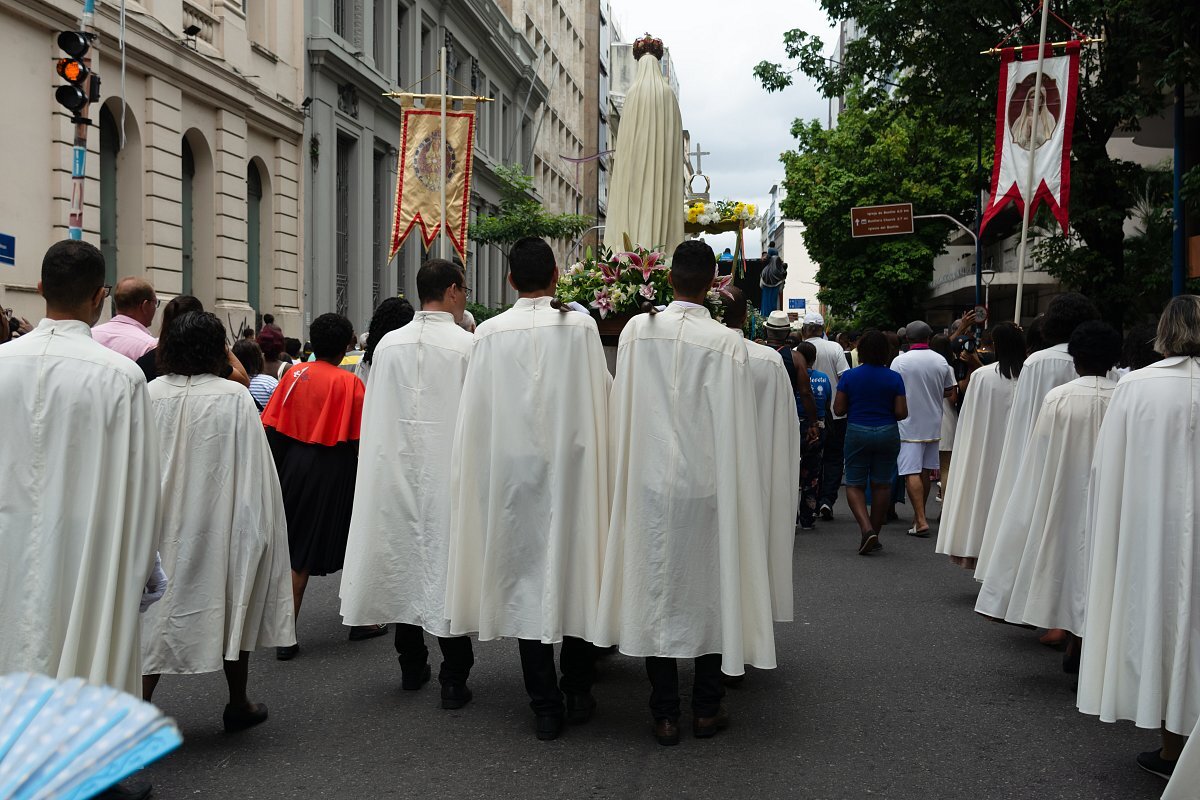 Pilgrims Walking the Refurbished Rome in 2026
They paved over 200 meters of Lungotevere in Sassia and routed the traffic underground. That's the one-sentence version of what the Jubilee did to Rome. The city's biggest construction story of the past decade is now invisible, which is, on reflection, the point.
The Holy Year is closed. The pilgrim badges are gone from café chair-backs. What's left is the city the Jubilee built, or, depending on who you ask, the city the Jubilee half-built. Both takes have merit. The walk from Castel Sant'Angelo to St. Peter's has been transformed. The resurfacing of Via del Corso has been postponed to 2026 because the commercial associations didn't want construction in front of their windows during the busiest year of the decade.
Here's what got done, what didn't, and what's worth seeing on foot.
The €1.725 billion question
The official program for Jubilee 2025 funded 332 projects across Rome. Total Jubilee-specific budget: €1.725 billion, layered on top of €500 million from the PNRR's "Caput Mundi" sub-program and €602 million from the standard Rome PNRR. Aggregate spend, all sources, runs north of €3.7 billion across three years.
The administration claims 86% of the 332 projects are "completed, finishing, or in progress." Independent counts put fully completed projects at 121, about 36%. The truth is somewhere in the middle: by early March 2026, around 221 projects (67%) were either finished or substantially advanced in at least some lots. Critics call this incomplete. Boosters call it remarkable. Whatever you call it, the public-facing pieces a visitor would notice are mostly done, and that's what this guide is about.
Piazza Pia: the showpiece
The cantiere everyone watched was Piazza Pia, the square between Castel Sant'Angelo and Via della Conciliazione. Until December 2024 this was four lanes of Lungotevere with 3,000 cars per hour crossing through. As of December 23, 2024, all of that traffic runs underground, and the surface is the largest pedestrian zone in Rome.
The numbers: €85.3 million budget, 450 days of construction, Anas as the executing entity, work performed in three shifts around the clock by 110 specialists. The dig surfaced a small Roman villa and a cache of Lastre Campana (terracotta roof tiles decorated with mythological scenes, reused at some point as sewer covers). The archaeology team boxed up the finds without halting the work; the artifacts are now displayed in the Castel Sant'Angelo gardens.
What you see today: two large circular fountains in the new pavement, a wide stairway descending to the Tiber, a young grove of holm oaks and Italian oaks, accessible ramps for reduced-mobility visitors, and lighting that doesn't compete with the basilica's. The mayor branded it la piazza dell'Abbraccio, the embrace square. It seats 150,000 for events.
A tunnel here was first proposed for the Jubilee of 2000. They couldn't finish it then. They finished it now. That's the entire story of Roman infrastructure timelines compressed into one paragraph.
Metro Line A, station by station
Metro Line A is being completely renovated, all 27 stations. Three stations were done in time for the start of the Jubilee in December 2024. The rest are rolling out across 2026 and will be substantially complete by year-end.
For visitors this matters in one specific way: the Ottaviano stop, the closest to the Vatican Museums, is among the renovated ones. The platform refurbishment is finished, the signage is new, the entrance flow has been redesigned. Getting from the metro to the museum line in 2026 takes meaningfully less time than it did in 2023, and the chokepoints that used to form at the platform-stairs intersection are gone.
The other transit story is the Termini forecourt, Piazza dei Cinquecento, redesigned with what the city is calling an "urban forest": new tree cover, new paving, fewer informal taxi gathering points. Phase one finished in December 2025; phase two runs through 2026. If you arrive at Termini in the next year, expect the square to look better than it did in 2023 but still partly fenced.
The squares that came back
Several smaller squares were quietly retaken from cars and given back to pedestrians during the construction window. Most visitors won't notice them by name. Together they change how the center feels on foot.
Piazza San Giovanni in Laterano, the forecourt of the cathedral of Rome, has been completely repaved and the traffic flow rerouted. Inaugurated December 2024.
Piazza Risorgimento, the gateway from the Vatican walls to Prati, is now partially pedestrianized with new paving.
Via Ottaviano, the avenue running from Piazza Risorgimento toward the Vatican, has been converted from a noisy commercial through-street into a tree-lined boulevard.
Piazza della Moretta, deep in the historic center near Campo de' Fiori, is fully pedestrian.
Ponte dell'Industria, the iron bridge that burned in October 2021 and remained partially closed for years, has been rebuilt and reopened. Strategic for east-west traffic, irrelevant to most visitors, but worth knowing if you're planning a Trastevere-Ostiense itinerary.
Add the cleaned facades to the list. Dozens of churches have had decades of pollution residue removed during the Jubilee window. The before-and-after on individual buildings ranges from subtle to dramatic. The travertine on Sant'Andrea della Valle is visibly lighter. The fountains on Piazza Navona have been restored. Trinità dei Monti is partway through a multi-year program.
What didn't get done
Walk through central Rome in spring 2026 and you'll still encounter construction barriers in several areas. The Jubilee was a major restoration push, not a total one.
The resurfacing of Via del Corso, the spine of the historic shopping district, was deliberately postponed to 2026 to avoid disrupting commerce during the Holy Year. As of this writing the work is ongoing. The same applies to Via Cola di Rienzo, the main shopping street of Prati, and Via Crescenzio, which feeds into it. The historic paving of Borgo Pio and Borgo Angelico, the medieval streets between Castel Sant'Angelo and the Vatican, is still being addressed in lots.
There have also been complaints. The traffic that used to flow through Piazza Pia now goes around it. Some residents in neighborhoods east of the Tiber have reported shifted congestion patterns. The pedestrianizations created big new open spaces; some of the traffic flow moved elsewhere.
The Ponte di Ferro in Ostiense, partially closed since the 2021 fire, finally reopened, but only after fourteen months of consolidation works that disrupted the entire southeast traffic quadrant.
None of this takes away from what was achieved. It does mean the simplest framing of "Rome rebuilt for 2025" overstates the pace. The more accurate version: a handful of showpieces finished in time for the Holy Door opening, a substantial second wave finishing through 2026, and additional work that will continue beyond it.
A half-day walking itinerary
If you want to see the results without organizing your day around them, here's a roughly two-hour walk that touches the major Jubilee-era pieces and finishes at St. Peter's. Best done late afternoon, when the light on the travertine is at its strongest and the day-tripper crowds have thinned.
Start at Castel Sant'Angelo. Walk across Ponte Sant'Angelo (the Bernini-angel bridge), then continue straight onto the new pedestrian surface of Piazza Pia. Take a minute at the fountains; the basilica dome lines up directly down Via della Conciliazione from here, and the photographic angle is the best it's been in 25 years now that there are no cars in the foreground.
Continue west on Via della Conciliazione. The street itself is one of the more controversial pieces of Roman urbanism. It was carved through a dense medieval neighborhood in the 1930s to create a processional approach to the basilica, a decision the architectural community has debated ever since. The pedestrian experience post-Jubilee is more coherent than it was, and some of the buildings facing the street have had their facades cleaned.
Cut north into Borgo Pio at any of the side streets (Borgo Vittorio, Borgo Sant'Angelo). This medieval quarter is where the artisans and souvenir sellers actually live. The paving work is ongoing here, so you'll dodge some construction. The compensation is genuine neighborhood character that you don't get on Via della Conciliazione.
Loop back to St. Peter's Square. Skip the line if you have a Vatican Museums booking; otherwise just sit on Bernini's colonnade and watch the basilica until the light fades. If you want to make a half-day of it, add an early visit to the Vatican Museums in the morning before this walk.
For context on what closed when the Jubilee ended, our post-Jubilee overview covers the Holy Doors and the broader picture.
One note for 2028 readers
The Roman patina returns. Cleaned travertine darkens within five to seven years. The new pavement of Piazza Pia will start collecting cigarette ash and chewing gum stains by 2027. The trees in Piazza dei Cinquecento will mature and lose their pristine look within a decade. The version of Rome on foot in spring 2026 is not the permanent one. It's the just-restored one, and there is something to be said for catching a city in that brief window.