
 Italiano
 Español
 Français
 Deutsch
 Nederlands
 Polski
 Português
 Português do Brasil
 Pусский
 日本語
日本語 简体中文
简体中文 한국어
한국어 Bahasa Indonesia
This is an independent website and it'is not affiliated with or endorsed by the Vatican Museums.


The Leone Collection at the Vatican Museums
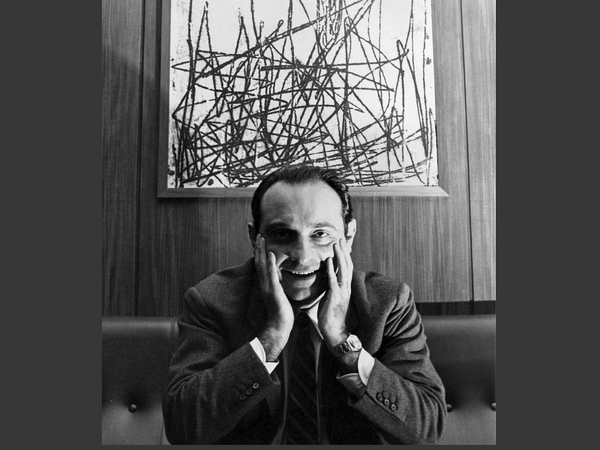 Leone Piccioni
At the end of the Jubilee Year 2025, the Vatican Museums will open to the public the exhibition "Unstoppable Curiosity". Masterpieces of the Twentieth Century from the Leone Piccioni Collection, the result of an important new donation that confirms the fruitful and continuous dialogue between the Institution and private patrons.
The exhibition, curated by Micol Forti, Director of the Collection of Modern and Contemporary Art at the Vatican Museums, will open on Thursday 13 November 2025 at 5.30 pm, in the Salette della Torre Borgia, with masterpieces from the collection of the Catholic intellectual Leone Piccioni (Turin 1925-Rome 2018), donated to the Vatican Museums by his children Gloria and Giovanni.
A writer, literary and art critic, academic, journalist, director and deputy general director of RAI, Leone Piccioni called his collection "my pride and joy, my heritage.An epithet that well expresses the depth of the intellectual's connection with each and every work in this highly selective collection of paintings, sculptures, drawings and prints by 20th-century masters.
In a life rich in encounters, interests and friendships, his love of contemporary art occupied a primary place. The main link between Leone and the Italian and international art world was the poet Giuseppe Ungaretti (Alexandria 1888 - Milan 1970), with whom he graduated in Rome in 1948 and to whom he remained linked by an unbreakable friendship. Thanks to him, Leone broadened his horizons and came into direct contact with many great artists, from Burri to Morandi, from Guttuso to Carrà, from Fautrier to Dorazio. These names are present in the exhibition with selected masterpieces that reveal Piccioni's taste. A taste that was refined over time thanks to his deepening interest in the sensibility of each artist and the relationships he established with each of them. This special relationship is at the origin of this collection. Each room recounts and illuminates a specific aspect of his work: the importance of human encounters, the richness of exchanges in the cultural circles that Piccioni frequented and that would guide his choice of works, the variations of his refined, personal and never predictable taste. The first room, Leone and Ungà: a meeting spanning two lifetimes, introduces and frames the birth of the collection in the context of the bond between Piccioni and Ungaretti, the true source of inspiration, and focuses on some of the artists they both loved: Maccari, Morandi, Guttuso, Severini and Fautrier. This is followed by the room dedicated to 'L'Approdo' and the artistic environment of Forte dei Marmi, which presents some of the main protagonists of these two 'places' of encounter and exchange, the first cultural, identified with the RAI newspaper, first radio (1944), then print (1952) and finally television (1963); the second geographical, a summer holiday destination for artists and intellectuals of the last century.
In the rooms Il gusto di Leone. Tra realismo e interessi sociali (Leone's taste. Between realism and social interests) and Il gusto di Leone. Visioni originali e spirito della natura (Leone's taste. Original visions and the spirit of nature), the public is welcomed into the heart of Piccioni's critical sense and aesthetic choices: The first reflects his attentive gaze on reality, the human condition and social issues; the second reveals his attraction to 'things of nature', translated into visionary, poetic and refined works by artists of different stylistic backgrounds, from Manzugrave; to Mafai, from Guarienti to Morlotti.
Legami e vicinanze (Links and Neighbourhoods) is a more limited space dedicated to two Tuscan artists less known to the general public, but particularly loved by Leone and linked to him by a deep friendship: the sculptor Venturino Venturi and the painter Mario Marcucci, who reworked the Christian iconographic tradition with an extraordinary and innovative sensitivity.
The two rooms , Maestri e amici. Figura, realtà e astrazione (Masters and Friends. Figure, Reality and Abstraction ) and Maestri e amici. Rome in the 1960s demonstrates the breadth of Leone's aesthetic horizons and takes its name from one of his most famous books, Maestri e amici (1969), in which he recounts his most important encounters with some of the leading figures of 20th-century culture and art: Burri, Afro, Capogrossi, Guttuso, Ceroli, Fioroni, Dorazio and Schifano.
Finally, the last room, Scritture e visioni (Writings and Visions). Valuable books, dedications and photographs, returns to the link with Ungaretti and offers a glimpse of the preciousness of some of the publications that Piccioni collected or received as gifts during his lifetime, which he kept in the vast library of his Roman home, now partly donated by his children to the Central State Archives, together with his correspondence with intellectuals and artists.
The exhibition also aims to pay tribute to Leone Piccioni on the occasion of the centenary of his birth.