
 Italiano
 Español
 Français
 Deutsch
 Nederlands
 Polski
 Português
 Português do Brasil
 Pусский
 日本語
日本語 简体中文
简体中文 한국어
한국어 Bahasa Indonesia
This is an independent website and it'is not affiliated with or endorsed by the Vatican Museums.


Pope Leo XIV: Even as the Jubilee Ends, We Remain Pilgrims of Hope
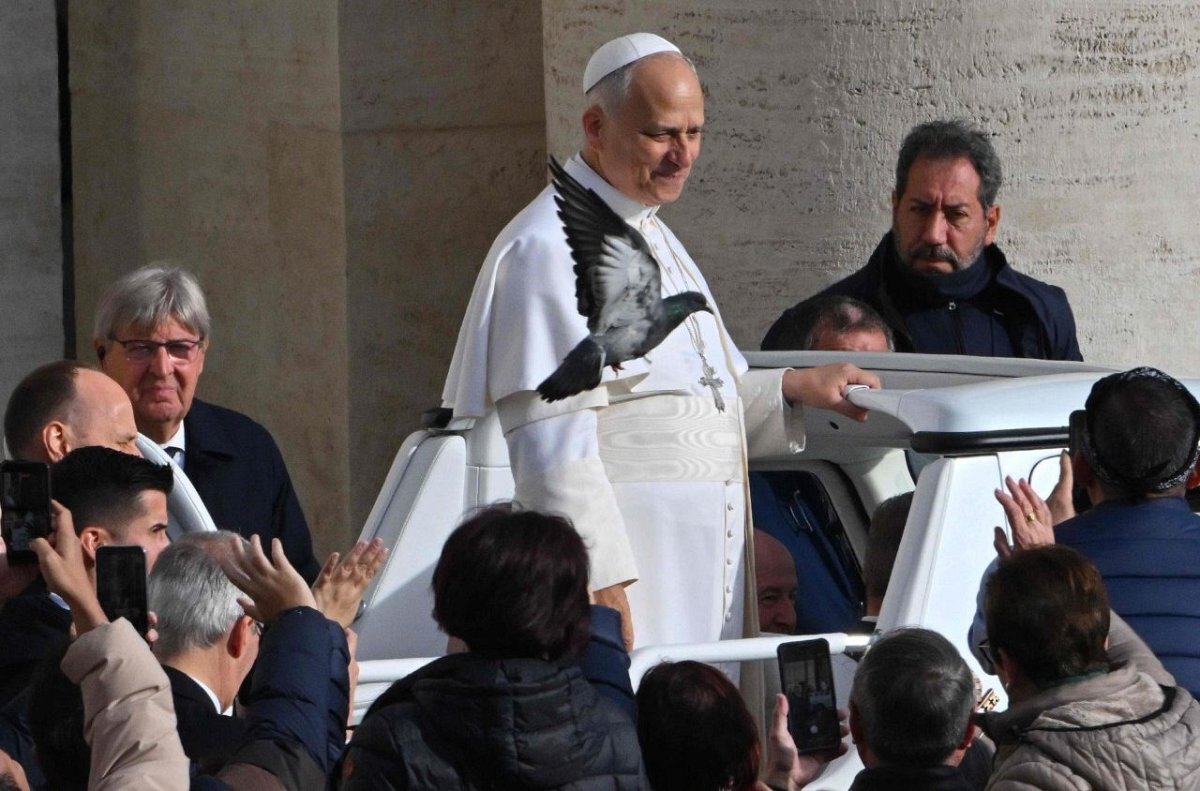 Pope: Even as the Jubilee ends, we remain pilgrims of hope
In his final Saturday Jubilee Audience of this Holy Year, Pope Leo XIV addressed the faithful, emphasizing that the pilgrimage it has inspired is not yet concluded.
"The Jubilee is nearing its conclusion," stated the Pope, "yet the hope that this Year has instilled in us shall not cease: we shall continue as pilgrims of hope.
Commencing his catechesis with remarks about the imminent celebration of Christmas, Pope Leo XIV contemplated the essence of Christian hope, which is founded not on fear but on the nearness of God as manifested in Jesus Christ.
He observed that, apart from Christ, the declaration that "the Lord is near" might be perceived as menacing; yet, in the context of Jesus, it transforms into a pledge of compassion.
"The essence of His being is not one of threat, but rather of forgiveness," the Pope remarked, highlighting the mystery of the Incarnation as the ultimate testament to a God who bestows life and perpetually revitalizes it.
Without Hope, We Are Rendered Lifeless
Citing the words of Saint Paul to the Romans, "For in hope we were saved," Pope Leo XIV elucidated that hope transcends mere sentimentality, serving instead as a vital and dynamic force.
He articulated that "without hope, we are dead; with hope, we come into the light," characterizing hope as a theological virtue, "a divine power," that fosters life.
The Pope articulated that genuine strength is not derived from domination or intimidation. He stated, “What threatens and kills is not strength; it is arrogance, aggressive fear, evil that generates nothing.” In contrast, he described God’s strength as one that “gives birth,” and, for this reason, he concluded that “to hope is to generate.”
The Cry of the Earth and the Cry of the Poor
In reference to the lamentations of creation as articulated by Saint Paul, Pope Leo XIV urged the faithful to attentively heed “the cry of the earth and the cry of the poor,” expressing sorrow over the inequities present in a world where resources are progressively amassed by a select few. He reminded us that the divine intention was for the goods of creation to be shared by all.
"Our responsibility," he stated unequivocally, "is to create, not to appropriate.
History in the Hands of God
The Pope observed that even suffering assumes a transformed significance within the context of faith, describing it as “the suffering of childbirth.” God remains an active creator, and human beings, buoyed by hope, are invited to participate in this ongoing creative endeavor. He stated, “History is in the hands of God and of those who hope in Him.”
Mary of Nazareth: The Embodiment of Hope
In his reflections on the Marian aspect of Christian prayer, Pope Leo XIV identified Mary of Nazareth as the embodiment of hope that imparts life. He stated that in her, believers recognize “one of us who generates,” a figure who provided “face, body and voice to the Word of God.”
“The desire for Jesus to be born anew is expressed by the Pope. “We have the capacity to provide Him with both body and voice. This represents the birth for which all of creation eagerly anticipates.”
He concluded by stating, "To hope is to envision this world transformed into the realm of God.