
 Italiano
 Español
 Français
 Deutsch
 Nederlands
 Polski
 Português
 Português do Brasil
 Pусский
 日本語
日本語 简体中文
简体中文 한국어
한국어 Bahasa Indonesia
This is an independent website and it'is not affiliated with or endorsed by the Vatican Museums.


Pope Leo XIV: The Resurrection of Christ Brings Hope to Human History
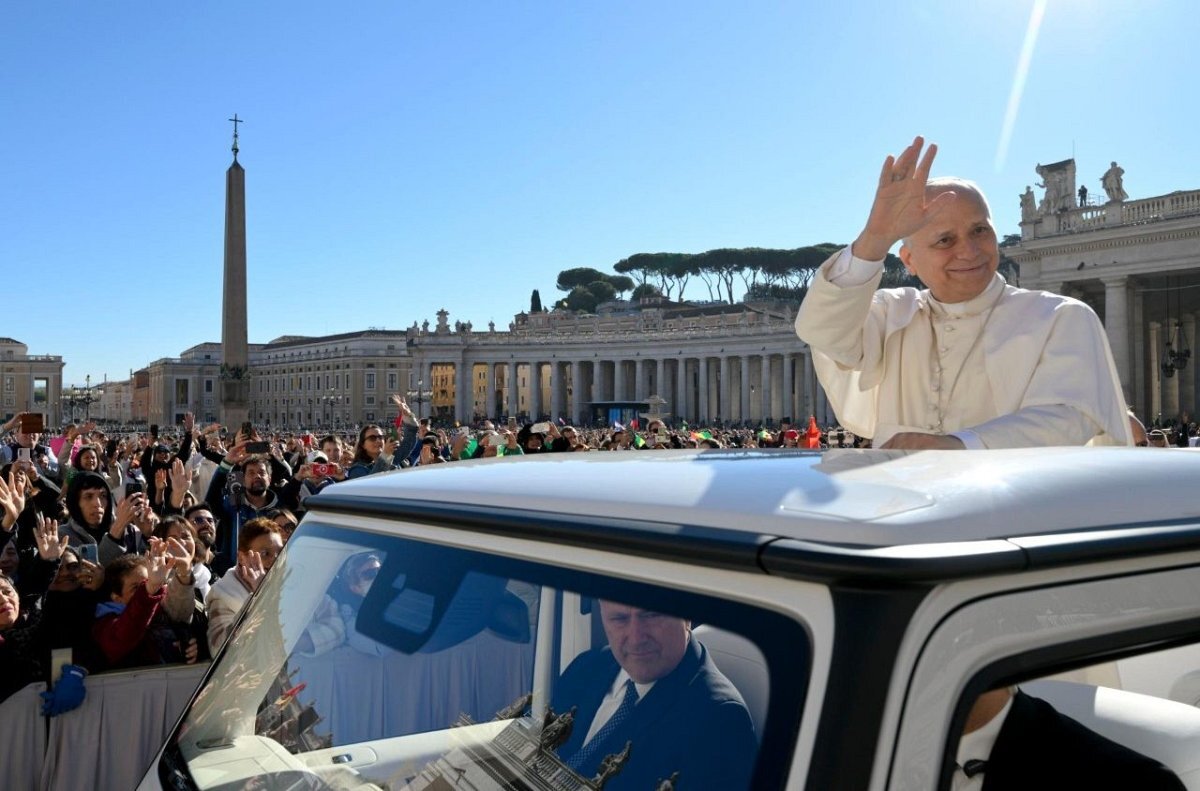 During an audience with believers, the Pope declared that the resurrection of Christ brought hope to the darkness of human history
Pope Leo XIV issued a statement at the Wednesday General Audience on November 5 in St. Peters Square: “Our age...is a time of so many trials and persecutions; one could say that it is a time of the manifestation of the Paschal hope.” In his catechesis, the Pope reflected on the Resurrection of Christ as “not only an abstract concept or a philosophical proposition; rather, the Resurrection of Christ is the Event with capital letters because it is the foundation of our faith.”
He emphasized that authentic trust in the Resurrection requires profound change in how we live. This could help to “transform the world,” with the use of the gentle and brave power of Christian hope.
The Pope urged, “Even in places where human history perceives no light on the horizon, we can serve as His witnesses. Paschal hope never disappoints.”
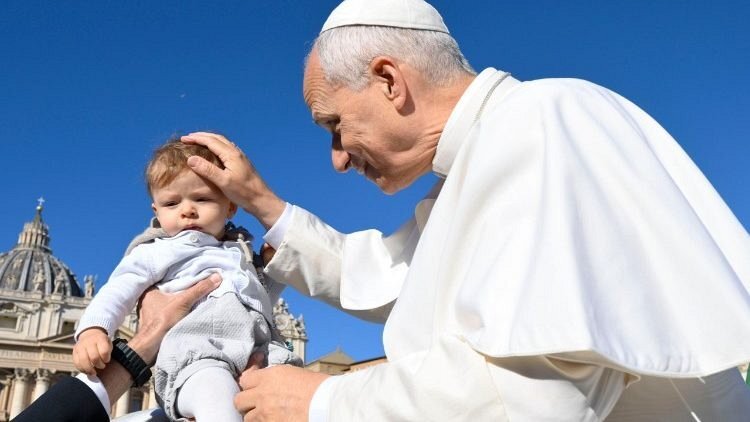 : Pope Leo XIV at the General Audience (@Vatican Media)
In the Resurrection of Christ, the Pope said, we find an answer to our deep yearning for meaning in times when we are lost, such as today when everything seems absurd.
He said, "We discover in Him a constant light to help lead or guide us through our sometimes difficult circumstances filled with confusing, intolerable and unimaginable things; evil, suffering, death and the thousands of things that happen to us all."
Pope Leo XIV stated that Jesus' Resurrection is "the beginning of the transformation of our lives from vulnerability to a source of compassion, healing and affirmation, inspiring hope for us during the tough times we experience daily, both in our own lives and as a global community".
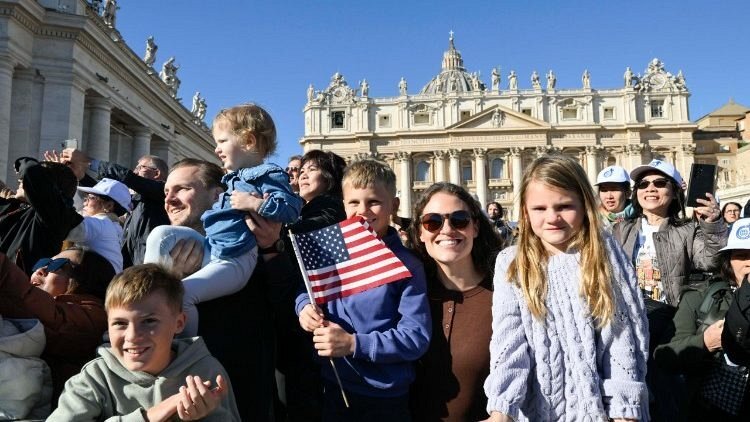 The crowd in St. Peter's Square during the General Audience (@Vatican Media)
He claimed that "The cross becomes light instead of death; it brings life." For us to enjoy the transition from the "cross of suffering" to celebrate the things we have learned through the resurrection of Jesus, we need to find new light and a new meaning in each area of our lives.
The book of Revelation (1:17) indicates that Jesus is a "Living One" and continues to maintain life through His resurrection today in the real lives of all people. Resurrection cannot be seen as something that exists only in history.
The Living Presence of the Risen Christ
Pope Francis expressed that Jesus through his sacrifice at Easter is still with us today and part of our daily lives rather than an event in historic time so the Church has also invited all individuals to participate through an annual liturgical commemorative service and continue living the significance of the resurrection of Christ through daily Eucharistic celebrations in our respective locations.
He has stated that"The foundation of Christian existence is through the Paschal Mystery and everything revolves from that." He continued by stating that"the spirit of Easter lives in every one of us and can be seen as we participate daily in our community, being willing to serve one another."
The Pope said, "The human heart seeks completion, a hole full of love." Therefore, we experience a number of times during every hour that we can be happy, amazed, or have peace, interspersed with sorrow and suffering or pain.
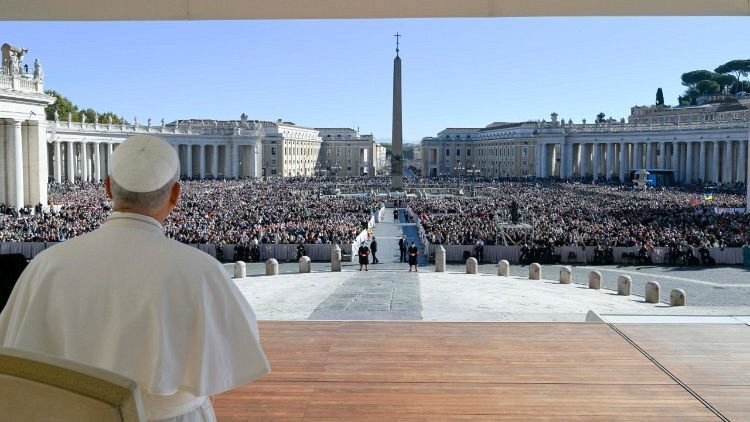 Pope Leo during the General Audience in St. Peter's Square (@Vatican Media)
The Search for Fulfillment and Eternal Life
The life of Santa Teresa Benedicto de la Cruz or (Stein, Edith) explains how people look for meaning in their lives through exploring the mystery of how we have the capacity to reach fulfillment through 'dynamism'. We have a desire for new life and we will always have new life given to us so that we can find value through the present moment; at the same time, we will also recognize that some things in life will no longer exist in our future.
Pope John Paul II declared resurrection to be the greatest celebration of victory, the highest expression of joy (that of Christ), and in discussing what we know about the nature of man, that the paschal proclamation (the proclamation of Christ's risen presence) was the greatest event that has ever occurred in all of human history; therefore, it is the realization of the fullness of the "Gospel" and affirms through His death and resurrection love has prevailed against sin and life has triumphed over death – it brings contentment to mankind's search for answers to the questions of their hearts and minds.
Pope Leo said that our quest for God's glory is an ongoing pursuit and we never find true satisfaction from anything that is finite or temporary because they will never bring us the fulfillment we crave. Therefore, we must continue forward in our journey to find what is the ultimate and everlasting, having an endless search.
Death, Hope, and the Empty Tomb
He wanted everyone to know that he still felt this way about death (that it's just an opposite of living and caused by pain, sorrow, and not succeeding). He went on to quote Francis of Assisi from his Canticle of the Sun: "None can be free of death."
In summary, the Pope underscored the profound impact of the Resurrection on the trajectory of human history.
The female followers of Jesus arrived at his burial place intending to prepare the body for burial, found it empty and met a "young man dressed in a white robe" who said to them, "Why do you seek the Nazarene who was crucified? He is not here; he is risen" (Mk 16:5-6).
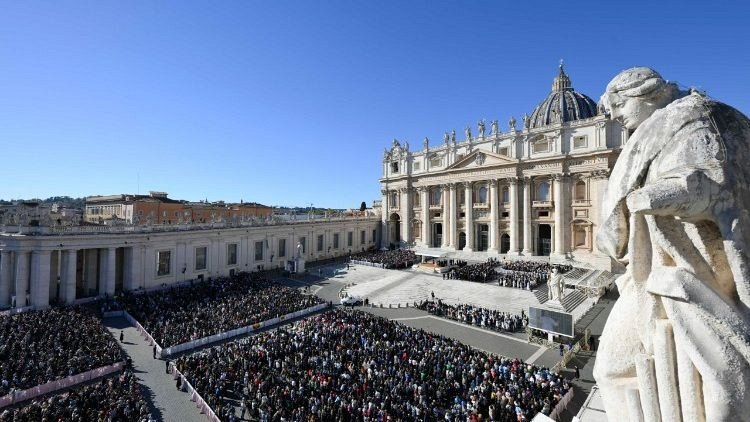 The crowd in St. Peter's Square during the General Audience (@Vatican Media)