
 Italiano
 Español
 Français
 Deutsch
 Nederlands
 Polski
 Português
 Português do Brasil
 Pусский
 日本語
日本語 简体中文
简体中文 한국어
한국어 Bahasa Indonesia
This is an independent website and it'is not affiliated with or endorsed by the Vatican Museums.


Pope Leo XIV: The Church Is a Prophecy of Peace and Unity That Embraces All
Pope Leo XIV's Message at the General Audience
In a world characterized by divisions and conflicts, the Church brings together its members through their faith in Christ and His love, thus embracing the mission to extend its outreach to all, as stated by Pope Leo XIV during the General Audience held in St. Peter’s Square on March 11.
The Pope emphasized that “united in Christ, the Lord and Savior of all individuals, the Church must never become self-focused; rather, it remains open and accessible to all.
He continued, “It is a significant beacon of hope—particularly in an era marked by numerous conflicts and wars—to recognize that the Church comprises individuals of various nationalities, languages, and cultures who coexist in faith.”
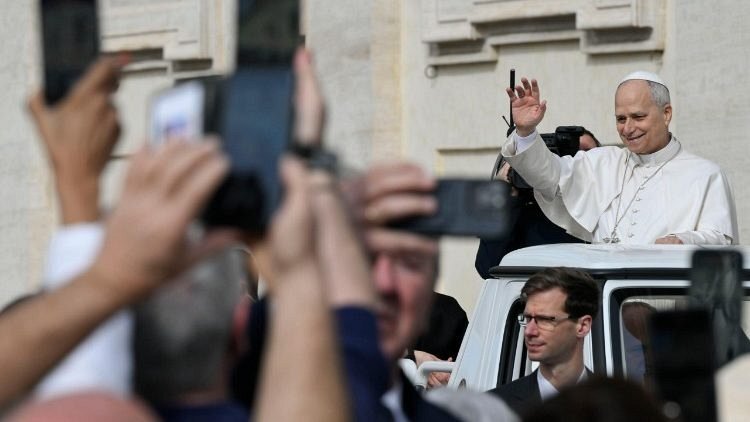 Pope Leo during the General Audience (@Vatican Media)
The Sign of the Lost and Lumen Gentium
“At the centre of our present reality as a human family is the 'Sign of the Lost,' which is a marker of both God’s call to all His children, as well as a foreshadowing of God’s desire to create unity and peace among his people throughout history,” he declared. Once again, Pope Leo XIV has continued his series of sermons about the writings from the Second Vatican Council and has moved onto discussing the Dogmatic Constitution of the Church written during the Second Vatican Council known as Lumen gentium (Dogmatic Constitution of the Church).
In this week’s catechesis, he contemplated the covenant established by God with His people and its implications for the Church and for each individual Christian.
He noted, “There is, and there must always be, a place within our Church for all people.” He noted further, “Every person who claims to be a follower of Jesus has a responsibility to support the proclamation of the Gospel to others wherever they may find themselves or be doing their daily work.”
God's Covenant from Abraham to Christ
Jesus unites His people. The Pope stated on behalf of God: “He has come to redeem every human being”; hence salvation will be worked out through all time via God's “moving through time with His people and having chosen His own.” He focused on how God called Abraham from the Old Testament and promised him that there would be many of his children, freed his people from slavery, and entered into a covenant with his people.
The Church's Identity Rooted in God's Creation
During his speech, Pope said, “This church has its identity rooted in the process of creation by God — as you trust in Him; therefore, you are called into being.” He also pointed out that “this church will be a guide for other nations, like the lighthouse that invites everyone to the island of all people.”
The New Covenant Ratified in Christ
According to Lumen Gentium, the Second Vatican Council explains that the Gospel's mission is fully realised only when considered as part of “the new and perfect covenant established in Christ; it is realised, also, through the more complete manifestation of God that took place in the incarnation of Jesus, the Word of God”. The Pope emphasised this point.
“Truly, it is Christ who, through the offering of His Body and Blood, brings this community together within Himself in a conclusive manner.”
“The identity of this people is given by God’s action and by faith in Him,” the Pope said, adding that “they are called to become a light for other nations, like a beacon that will draw all peoples, the whole of humanity, to itself.”
In Lumen gentium, the Second Vatican Council explains that this mission takes its fuller meaning in light of “that new and perfect covenant, which was to be ratified in Christ, and of that fuller revelation which was to be given through the Word of God Himself made flesh,” the Pope underlined.
“Indeed, it is Christ who, in giving His Body and His Blood, unites this people in Himself and in a definitive way.”
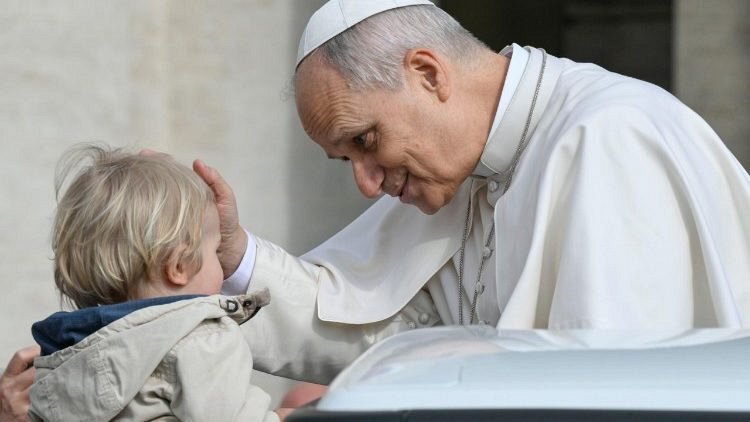 Pope Leo greeting the faithful (@Vatican Media)
The Church: Community of God's People
Within an understanding of the current state of the Church, the Pope has said that “the Church today is defined by the presence of a global community of people … who have become followers of Christ through baptism and who together form the Body of Christ.” As such, all these individuals—both male and female and as a result of diversity in nationality, ethnicity, and culture—share their commonality through their relationship to Jesus Christ, and that is the ultimate unifying force for the community of believers in the Church throughout the world today.
The Pope added that “The people in this community don’t have any pride about what they’ve done or what titles they’ve received from others. All they see is that they exist by the graciousness of God and that they are His children through Jesus Christ.”
The Christian's Highest Title
He stressed that the top priority as members of the Church should be to “remain attached to Christ” and “become (through God's) Grace, children of God.” In this regard he claimed that the Church's goal as believers should be to “have as our only honorary title, the name of the Christian.”
Therefore, the governing value for the community of all Catholics therefore is that of love, in Jesus, which forms the foundation for their relationship to one another. The ultimate goal of the Church's communal assembly is to strengthen the unity of the Church with God and each believer on the common road of faith leading to God’s heavenly kingdom.
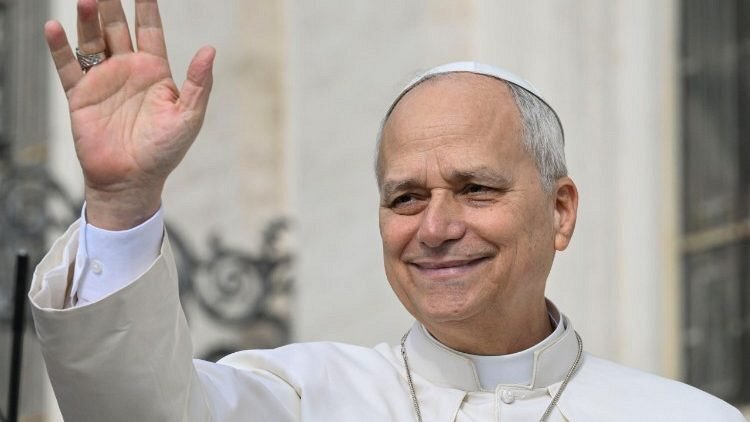 Pope Leo during the General Audience (@Vatican Media)
The Church: A Universal Mission
The Church is comprised of the People of God who are gathered together through Christ in order to share the blessing of God's Good News with one another and with the world. This is the mission of the Church and of every member of the Church.
According to Lumen gentium, “all men shall be invited into [God’s] new people”; for this reason, the New People of God should continually reach out to all men throughout every generation and do God’s will by gathering [His children] to Him.
The people of God have been pointed towards those who have not come to Christ yet, who will guide them to God's people in some way or other. The Church has an obligation to take the good news of Jesus (the gospel) to all nations and people. The goal of the church is to make it possible for every person to come into a personal relationship with Jesus Christ.
Inclusivity and Henri de Lubac's Vision
This encourages the Church to embrace inclusivity, welcoming diverse cultures while simultaneously “presenting them with the transformative power of the Gospel to refine and uplift them.
According to Pope John Paul II, Henri de Lubac’s belief regarding the oneness and diversity of the people who belong to the Church and Christ: “In this regard, the Church is one but possesses all.” As Henri de Lubac himself has said, the Ark of Salvation can unify all the diversity of mankind.
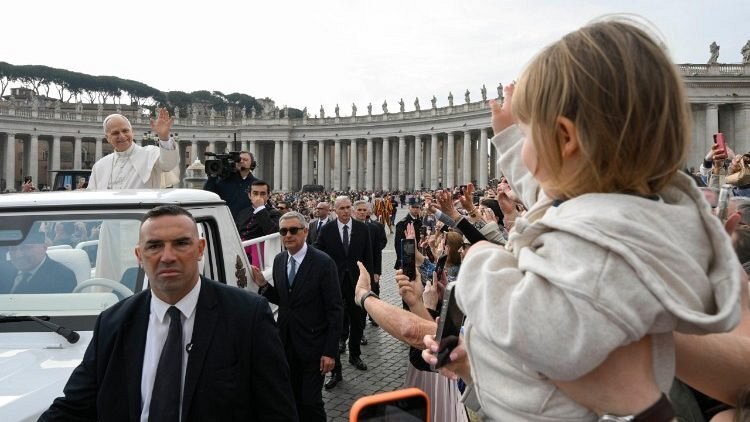 Pope Leo greets the faithful in St. Peter's Square (@Vatican Media)