
 Italiano
 Español
 Français
 Deutsch
 Nederlands
 Polski
 Português
 Português do Brasil
 Pусский
 日本語
日本語 简体中文
简体中文 한국어
한국어 Bahasa Indonesia
This is an independent website and it'is not affiliated with or endorsed by the Vatican Museums.


March 21: Commemorating the death of St. Benedict of Nursia, the patron saint of Europe.
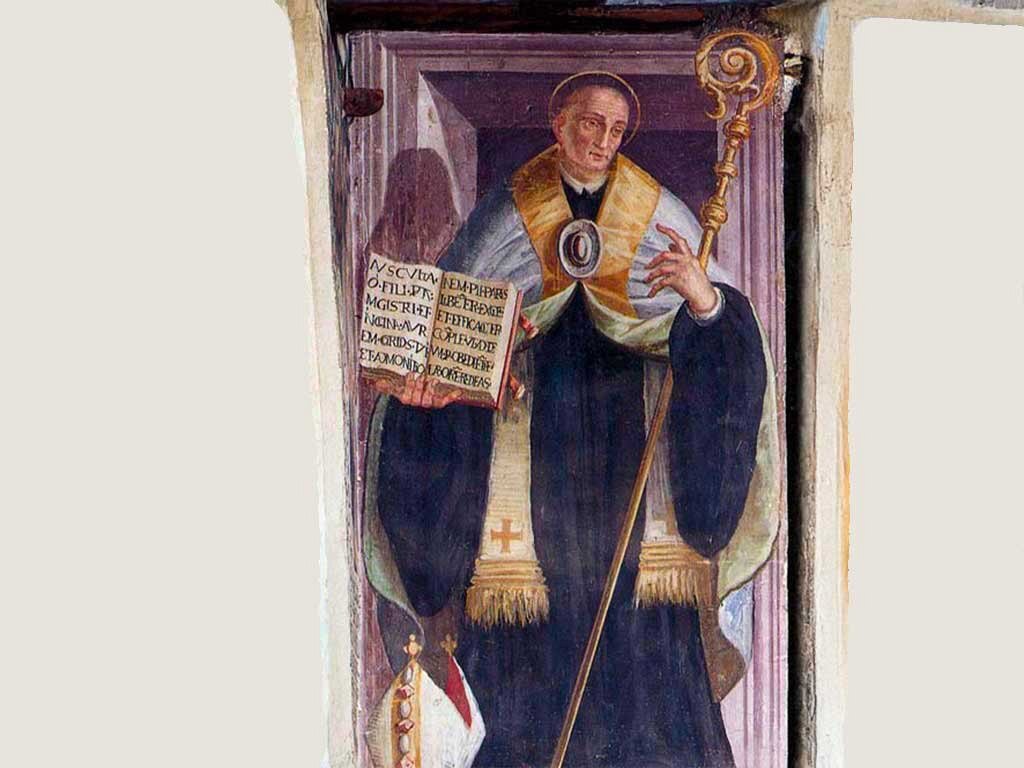 March 21: Commemoration of the death of St. Benedict of Nursia, the patron saint of Europe
According to Saint Gregory the Great's Book II of The Dialogues, Saint Benedict died after receiving Holy Communion and standing with both arms raised in prayer, while being supported by other Disciples who were with him as they were giving him their blessing.
On March 21, 547, Saint Benedict died approximately 40 days after St. Scholastica died; St. Benedict and St. Scholastica are both buried together. This is the date that is observed by Benedictine communities worldwide (men and women) to celebrate their Founder. The Church observes the feast of St. Benedict on July 11, the day his relics were transferred, after St. Paul VI named him the Patron of Europe on October 24, 1964. The Orthodox Church celebrates his commemoration on March 14.
March 21 stands as a significant occasion for us, the Benedictine nuns of the Mater Ecclesiae Monastery in the Vatican, as we honor the memory of our Father and Founder.
Gregory the Great describes Saint Benedict as a “brilliant star,” guiding those to whom he provides light about Europe from the time after the fall of Rome, which had become a place without a single controlling political power and was subject to division through wars, chaos and instability due to the invasion of new peoples and decay of morality.
Benedict is a beacon of hope not only to his countrymen, but to all people across Europe and the globe in helping to penetrate the darkness of the world's darkness that can surround a person who lives in the shadow of death. The communities he built, and those built in accordance with his Rule, have become, and will continue to become, a source of spiritual sustenance for humanity. They bring profound depth to our shared experience of the Church through the Christian faith.
Benedict saw the decline of the world around him - it was corrupt and divided, confused and oppressed, and these realities were part of everyday life. Because of this situation, Benedict called people to commit their lives to Christ and he encouraged them to join him in doing so. Instead of a spirituality that is separate from the physical world, Benedict offered a way of seeing life through the eyes of God (i.e. discernment).
This pursuit of God involves the formation of a rule that creates a structured way to live as a monk and learn to follow Christ through spiritual growth. Gregory the Great’s Dialogues refer to the "Rule" and its stress on moderation, expressing the purpose to help keep from placing undue stress upon those who would wish to follow a monastic rule instead. One goal of Benedict’s was for an Abbot to lead in such a manner that encourages the generous aspirations of the strong while not discouraging the weak (64:19).
The Rule consists not only of a systematic arrangement of how to live as a monk and nun, but also includes the attributes fundamental to lived monastic experience. Some examples of these attributes are: faithfulness to authority figures, submission to one's own inadequacies as a human being, and commitment to remaining silent. The Rule is additionally concerned with regulating all aspects of the liturgical life of the monastery, known in the Rule as opus dei, or "Work of God," which forms the essence of the monastic vocation.
Benedict's emphasis on the role of the abbot or abbess as a representative of Christ in the monastery requires them to display outstanding wisdom and instruction. Because they are responsible for making sure their disciples obey them, they must concentrate fully on leading their disciples to holiness; they want their disciples to love them instead of being afraid of them.
In the heart of the Church, our Catholic community of Benedictine nuns located in Vatican City has been given the great honour of the sacred mission of offering continuous prayers to the Successor of Peter. This mission is engaged in solidarity with all other communities of women and men throughout the world who are contemplatives and inspired by the Rule of St. Benedict.
The Rule is a text that must be read daily to appreciate and understand its transformative significance. The Rule has 73 chapters and serves as a roadmap to life and happiness. It provides direction and assistance to people on their life's journey. The Rule does not claim to provide total guidance; it intends to unleash the energy within each person and focus that energy toward God. As a partner of Christ on this journey, the Rule enables us to continue to move ahead. The Rule can also be used as an educational tool in service to the Lord. Each day the abbot or abbess will read a passage from the Rule and reflect upon that passage so the Rule can be lived out and reflected upon by all.
Benedict defines monastic living as a 'school' to serve the Lord's purposes (Prologue 45), while stressing that the 'work of God' should be of utmost priority above all other personal interests (43:3). Benedict also warns that praying is merely an act of listening (Prologue 9-11; Prologue 35) and requires an equally faithful response in daily actions according to the Lord's teaching. In doing so the monk is able to establish a balance between prayer and action and accomplish "Ut in omnibus glorificetur Deus" (Glory to the God of all things, 57:9) .
Atop the hill of the Vatican, we seek to be a shining light for our brothers and sisters around the world by pointing them to the knowledge of Christ and giving them access to the fullness of His mercy. Assured that Benedict accompanies us, even in the seclusion of the monastery, we are aware of the difficulties faced by those suffering from oppression and violence every day. Thus, we present to God all of the requests from those who are in need, knowing that the Lord is always looking after His children and as a loving Father wants only what is best for His children.
As an example comparable to the time of Benedict (5th-6th-century), the time began with substantial destruction and disunion due to the collapse of the Roman Empire or similar period has been experienced by numerous generations (including today). As we are reminded through world news on a daily basis with reports of wars and conflict around the world, Saint Benedict’s life example serves as a witness to peace and brotherhood and faith in God, who is the source of life for all people. He showed through his own example how it was possible to have faith in Christ (who brought about transition to a different time and culture) when everything around him was changing and basic values were being disrespected and rejected; it is still true today through people and communities who continue to follow and live according to the Rule and gift of charism of Saint Benedict.
By celebrating Saint Benedict, we are hoping to discover our inner spiritual selves and experience the peace that only comes from Christ. Mater Ecclesiae Monastery
Mater Ecclesiae Monastery